There is a moment in the 1967 movie The Graduate in which a young man, played by Dustin Hoffman, is taken aside by a family friend. The family friend tells the young man that he has just one word for him.
That one word turns out to be plastics.
Hoffman’s character is not sure how to apply that one word to his life (though at least one real-life person was). But we have just one word that we are certain applies to the life of every person in recovery from a substance use disorder.
That one word turns out to be neuroplasticity.
Now, it is likely the case that you have a much clearer understanding of the word “plastics” than you do of the word “neuroplasticity.” After all, the former is common enough, while the latter is somewhat obscure in the way that longer words that don’t come up much in conversation often are.
Neuroplasticity is actually a vital concept to understand for those who are in recovery from a substance use disorder. After all, it is arguably neuroplasticity that makes recovery possible.
We have tackled this important topic before, and in this post, we are going to round up our previous entries on the subject. We admit that all of this is going to add up to a lot more than one word—but we think it is worth your time and consideration.
Neuroplasticity Is All About Brain Pathways
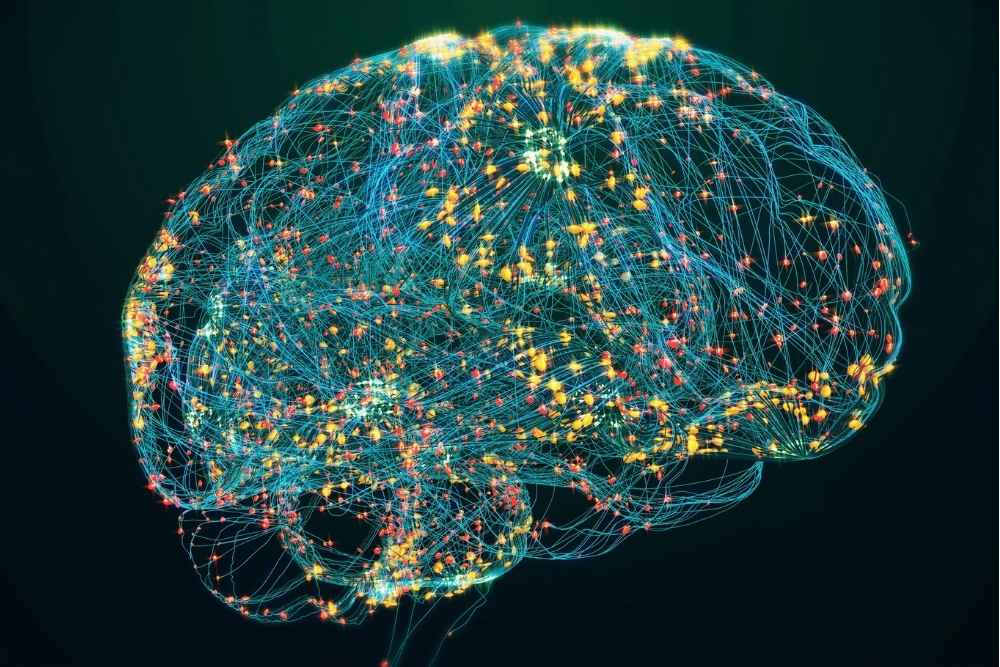
The “neuro” part of “neuroplasticity” refers to your nervous system—including your brain. The “plasticity” part refers to the amazing ability of your brain to accept new pathways that can lead to changed behavior.
In blogs called “Under Construction: Neuroplasticity Offers a Smoother Road Ahead” and “Change is Possible, Thanks to Neuroplasticity,” we suggested that a good way to think about this creation of new pathways was to think about road construction. Here is a shortened version of the metaphor from the latter of the two blogs we just linked to.
Imagine a highway interchange—one of those spots where you leave one interstate to merge onto another…Now imagine that this cloverleaf interchange is something you have been navigating for as long as you can remember…And then, over a series of long, confusing months, a construction project completely redesigns the interchange…Once you get used to it, the new interchange is probably significantly better than the old one. Safer, quicker, easier to navigate. But until you get used to it, you will probably feel a bit of confusion—or even frustration—each time you approach the new route because you are so very used to the old route.
In a third blog, this one titled “Neuroplasticity Means You Are Not Stuck in a Rut,” we suggested that readers should take a moment to think about their habits:
The fact of the matter is that we all have a range of habits. Brushing your teeth first thing in the morning is a habit, for example (that’s a good habit). The route you take to work is likely habitual (that’s a neutral habit). Using drugs or alcohol can be a habit (that’s a bad habit).
The thing about habits of all kinds is that they can feel unchangeable and permanent. That’s great when we are talking about good habits, fine when we are talking about neutral habits, and terrible when we are talking about bad habits.
Fortunately, however, habits are not necessarily permanent. Due to a feature of our brains—a feature called neuroplasticity—we can make changes to our habits. In the case of bad habits like those associated with a substance use disorder, this is good news, indeed.
We’re going to come clean here. As suggested by the “the route you take to work” bit above, you probably won’t be surprised that we leaned into a road construction metaphor in that post, too. Apparently, we have a habit of sticking with a single metaphor—a habit that we could change due to neuroplasticity.
A Couple of Additional References to Neuroplasticity
We have provided links to the three blogs in which we explored neuroplasticity in the most detail. But the topic has arisen in a couple of other posts as well.
For example, in “Yo, Go Get the Benefits of Yoga in Recovery,” we note that yoga practice seems to support the brain’s neuroplasticity—which is just one of the benefits we discuss.
Neuroplasticity also pops up in the second entry in our series on recovery truths. Here, while debunking the idea that people choose to become addicted to drugs or alcohol, we note that neuroplasticity makes it possible to change paths for the better.
Getting Help Should Be a No-Brainer
Located in Henryville, Indiana, Wooded Glen Recovery Center combines expertise, experience, evidence, and empathy to develop personalized treatment plans for individuals struggling with a substance disorder. Additionally, Wooded Glen can treat mental health disorders that may be tangled up with issues related to drug or alcohol use.
We believe it is always the right time to start living your life again with hope for a brighter future. We can help you learn how to do just that.