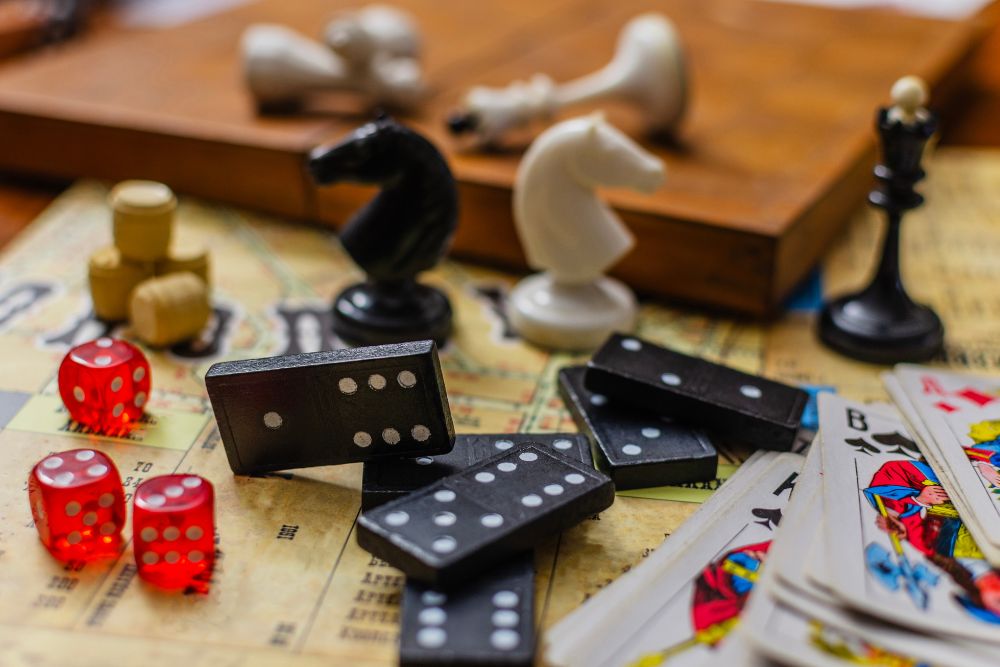
Board games have been around for a long, long time—and it is likely you have played any number of them over the years. From checkers to chess, Go to Backgammon, Candy Land to Battleship, or The Settlers of Catan to Wingspan, there are all kinds of games that appeal to all kinds of people.
Generally speaking, you probably do not think of board games as having much to do with substance use disorders, treatment for those disorders, or the recovery journey. We would like to make the case, however, that some of the best-known and most beloved board games can offer a lesson or two that can be applicable for a person with a substance use disorder—no matter where they are in their journey.
Let’s start with a game with a name that is the opposite of recovery efforts.
Neither Treatment nor Recovery Is a Trivial Pursuit
Trivial Pursuit took American game playing by storm when the first edition was released in 1981. The game involves answering questions in six different categories in an effort to collect the pie pieces that fill in your game token and return to the center of the board.
We start with Trivial Pursuit to make an important point. It might be a great game, but it is a terrible way to think about treatment for and recovery from a substance use disorder. Neither of those things are trivial pursuits at all. Indeed, they are about as important as they can be. That’s the case, because…
A Substance Use Disorder is Definitely Trouble
The defining feature of the board game Trouble is the “Pop-O-Matic”—a plastic bubble with a die inside. Press down on the bubble and the die is “rolled.” The popping sound is quite satisfying.
Trouble is, of course, the perfect description of a substance use disorder. It would be delightful if you could press down on a plastic bubble to roll your way out of trouble, but that is not how a problem with drugs or alcohol can be resolved.
The Mixing and Matching of Scrabble Is a Treatment and Recovery Metaphor
Scrabble players make words from the seven tiles before them in combination with at least one letter that is already on the crossword-style board. Each game is a different experience as the combinations of letters you draw from the bag—combined with the situation on the board and impacted by your vocabulary (it is helpful to know 7 and 8-letter words, for example)—has a great influence on what words get played.
How is this like treatment and recovery? Well, the fact is that treatment for a substance use disorder is personalized to your specific needs and therefore might vary from the experiences of others. Your personal strategies in recovery also will be unique to you as well as you work to find the best options for protecting your recovery over time.
Sometimes Recovery Can Feel Like a Game of Chutes and Ladders
The goal in recovery, of course, is to just keep going, day after day, climbing up a series of metaphorical ladders leading to lasting abstinence from drugs or alcohol.
However, many people in recovery experience the setback of a relapse—and that can feel like sliding down the slides in a game of Chutes and Ladders. The recovery journey might also involve smaller setbacks that can be frustrating to address, but each setback provides an opportunity to get headed in the right direction again.
Recovery Can Involve Saying “Sorry!” to Those You Have Hurt
In the game known as Sorry!, the apologies are usually sarcastic. You might deliver a disingenuous word of regret when you land on another player’s piece and bump them from their position.
In recovery, however, apologizing for harm you have caused while under the influence of drugs or alcohol is an important practice. Rebuilding relationships can be a powerful thing—though sometimes patience is required if a person you have hurt needs time to arrive at forgiveness.
Some Places Are Like High Rent Properties in Monopoly
As a game of Monopoly unfolds, players tend to build houses and hotels on the properties they have acquired throughout the game. Each bit of construction increases the rent the owner can demand from a player who lands on a property. Late in the game, the rents can be so high that a player cannot pay them and is eliminated from the game.
There may be places like that in your recovery journey as well. Avoiding locations (as well as people and other triggers) that you associate with your former use of drugs or alcohol is a solid strategy. Going to these places can chip away at the foundation of your recovery. You can think of that as being a price too steep to pay that could cost you what you have worked for.
A Substance Use Disorder Is Not a Game
At Wooded Glen Recovery Center—located in Henryville, Indiana—we provide treatment for substance use disorders and co-occurring mental health disorders. Our entire staff is committed to your treatment and recovery when you seek out help for a substance use disorder on our scenic and serene campus. When you are ready to make a change, we are ready to help.